

TEXTBOOKS
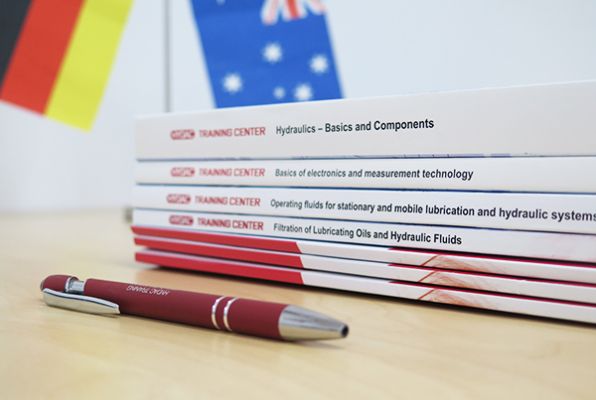
We have a 202-page textbook available, entitled “Operating Fluids for Stationary and Mobile Lubrication and Hydraulic Systems” and a 141-page textbook available, entitled “Filtration of Lubricating Oils and Hydraulic Fluids”.
Some of the topics highlighted in “Operating Fluids for Stationary and Mobile Lubrication and Hydraulic Systems” are:
- Introduction to hydraulic and lubrication systems
- Operating fluids
- Tribology
- Function of the operating fluid
- Composition of operating fluids
- Types and production methods
- Additives
- Properties and characteristic values
- Density, temperature dependency, pressure dependency, compressibility, viscosity etc.
- Impurities / contamination in operating fluids
- Testing operating fluids
- Classes of operating fluids
- Lubricating greases
Some of the topics highlighted in “Filtration of Lubricating Oils and Hydraulic Fluids” are:
- Contamination
- Sources of contamination
- Types of contamination
- Limitation of solid particle contamination
- Particle separation
- Filter element characteristics
- Nominal filtration
- Absolute filtration
- Filter design and sizing
- Filter element and housing types
- Selection of filter size, element and connection
- Condition monitoring
- Total cost of ownership (TCO)
- Life cycle cost (LCC)
- Fluid engineering
- Filtration of metal machining fluids
Location
Other Available Courses



Testimonials
FAQs
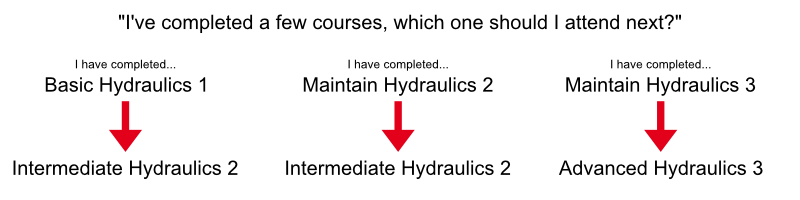
- What is the HYDAC Intermediate Hydraulics 2 course?
The HYDAC Intermediate Hydraulics 2 course is an hydraulic training program designed for participants who already have a basic understanding of hydraulic systems and want to develop deeper technical knowledge. This course builds on the knowledge acquired in the Basic Hydraulics 1 course. It will provide a high level of detail for those wishing to expand their understanding and knowledge of common hydraulic components and their functions within a system. It helps technicians, engineers and maintenance professionals improve their ability to understand, maintain and optimise modern hydraulic systems used across industrial and mobile applications.
Who should attend the HYDAC Intermediate Hydraulics 2 training course?The HYDAC Intermediate Hydraulics 2 course is suitable for hydraulic technicians, maintenance professionals, engineers, service personnel and tradespeople who have completed basic hydraulic training or have practical experience working with hydraulic equipment. The course is designed for anyone who deals with industrial and mobile hydraulic systems, team leaders, engineers, supervisors, sales people and maintainers.
What knowledge do I need before completing Intermediate Hydraulics 2?Participants should have a basic understanding of hydraulic systems before attending Intermediate Hydraulics 2. Previous knowledge of hydraulic components, system operation and fundamental fluid power concepts is recommended. Completing HYDAC Basic Hydraulics 1 or having equivalent workplace experience provides a suitable foundation before progressing into the intermediate-level topics covered in this course.
What will I learn in the HYDAC Intermediate Hydraulics 2 course?The course provides a deeper understanding of hydraulic systems and the factors that influence performance and reliability. This course includes detailed practical demonstrations. A particular outcome of this course is an understanding of the complex interplay of hydraulic components within a system. In this course, you have the opportunity to gain hands-on experience with proportional valves and pumps. The training helps attendees understand how these elements affect hydraulic component life, system efficiency and overall machine performance.
What topics are covered in Intermediate Hydraulics 2 hydraulic training?HYDAC Intermediate Hydraulics 2 covers key areas including safety, interpreting circuits and selection of components, actuators, pumps control, direction control valves, closed loop hydraulic circuits, and hydro-pneumatic accumulators.
Can maintenance technicians benefit from Intermediate Hydraulics 2 training?Yes. Maintenance technicians can benefit from Intermediate Hydraulics 2 by gaining a better understanding of the factors that influence hydraulic equipment reliability. The course helps technicians understand maintenance considerations that can support improved troubleshooting, reduced downtime and improve hydraulic system performance.
What industries can benefit from Intermediate Hydraulics 2 training?The skills developed through HYDAC Intermediate Hydraulics 2 are valuable across industries that rely on hydraulic equipment, including mining, manufacturing, construction, agriculture, power generation and many others. Professionals working with hydraulic systems in these industries can use this knowledge to improve equipment maintenance, reliability and operational performance.
How long is the HYDAC Intermediate Hydraulics 2 course?The HYDAC Intermediate Hydraulics 2 course is delivered in 4 days, as a structured training program designed to provide in-depth knowledge of intermediate hydraulic concepts. The course allows participants to build on their existing hydraulic understanding and develop stronger technical skills
What skills will I gain after completing Intermediate Hydraulics 2?After completing Intermediate Hydraulics 2, participants will have a stronger understanding of hydraulic fluids, lubrication systems, contamination control and filtration principles. They will be better equipped to analyse factors affecting hydraulic system performance, support maintenance decisions and apply improved practices when working with hydraulic machinery.
Why choose HYDAC Australia for hydraulic training?HYDAC Australia provides specialised hydraulic training designed around real-world industrial applications and fluid power technology. The Intermediate Hydraulics 2 course helps professionals expand their hydraulic knowledge through structured learning focused on system reliability, maintenance and performance. It is part of HYDAC’s broader hydraulic training pathway, allowing participants to continue developing their skills through progressive levels of hydraulic education.