

This course gives you a practical, hands-on look at cooling in fluid power systems and how to optimise thermal performance in real applications. Across two days, you’ll explore why cooling matters, how different cooler technologies work, and what separates a high-quality cooler from the rest.
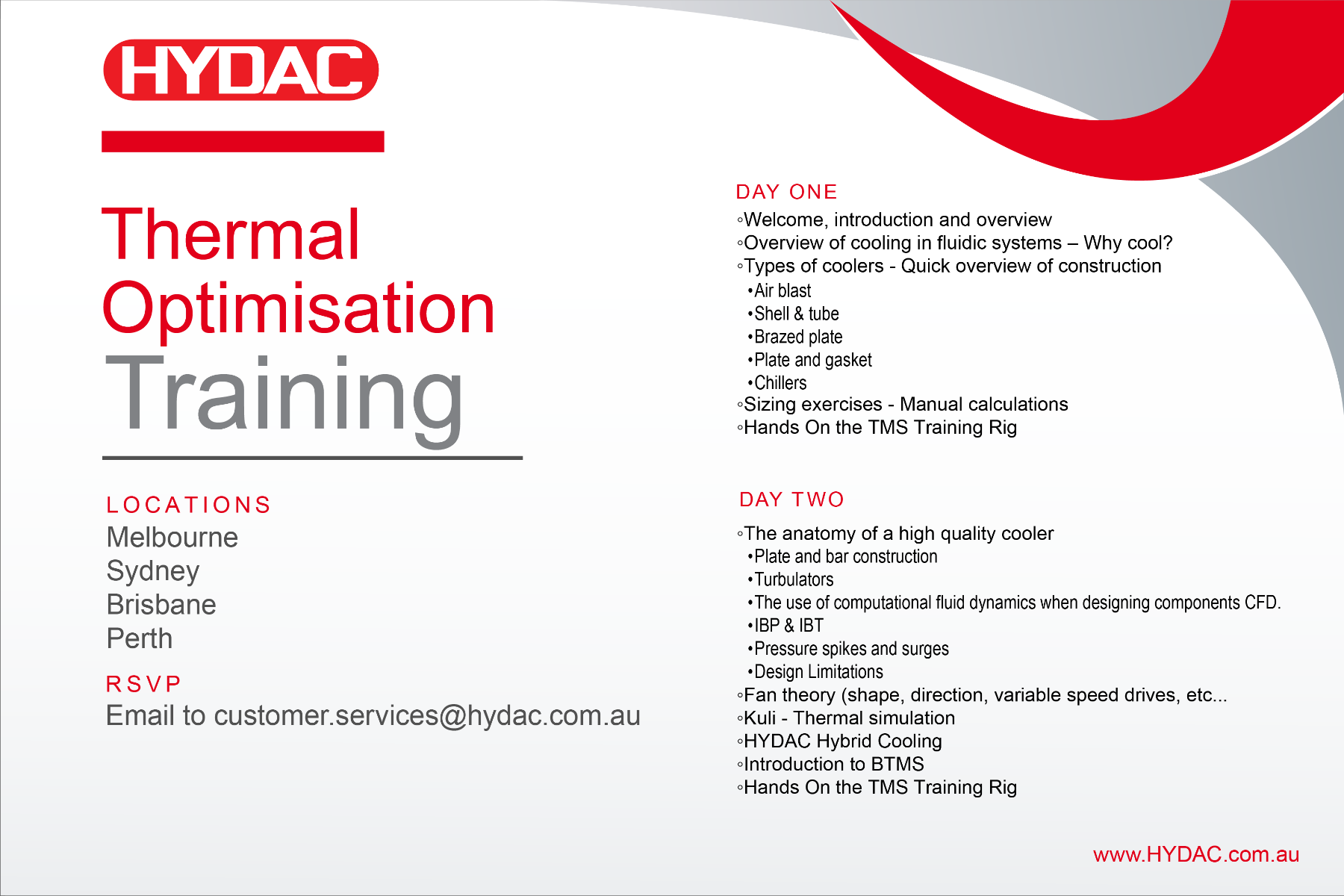
We’ll cover core concepts like manual sizing, fan theory, hybrid cooling strategies, and thermal simulation using Kuli. You’ll also get an introduction to BTMS and see how computational fluid dynamics supports modern cooler design.
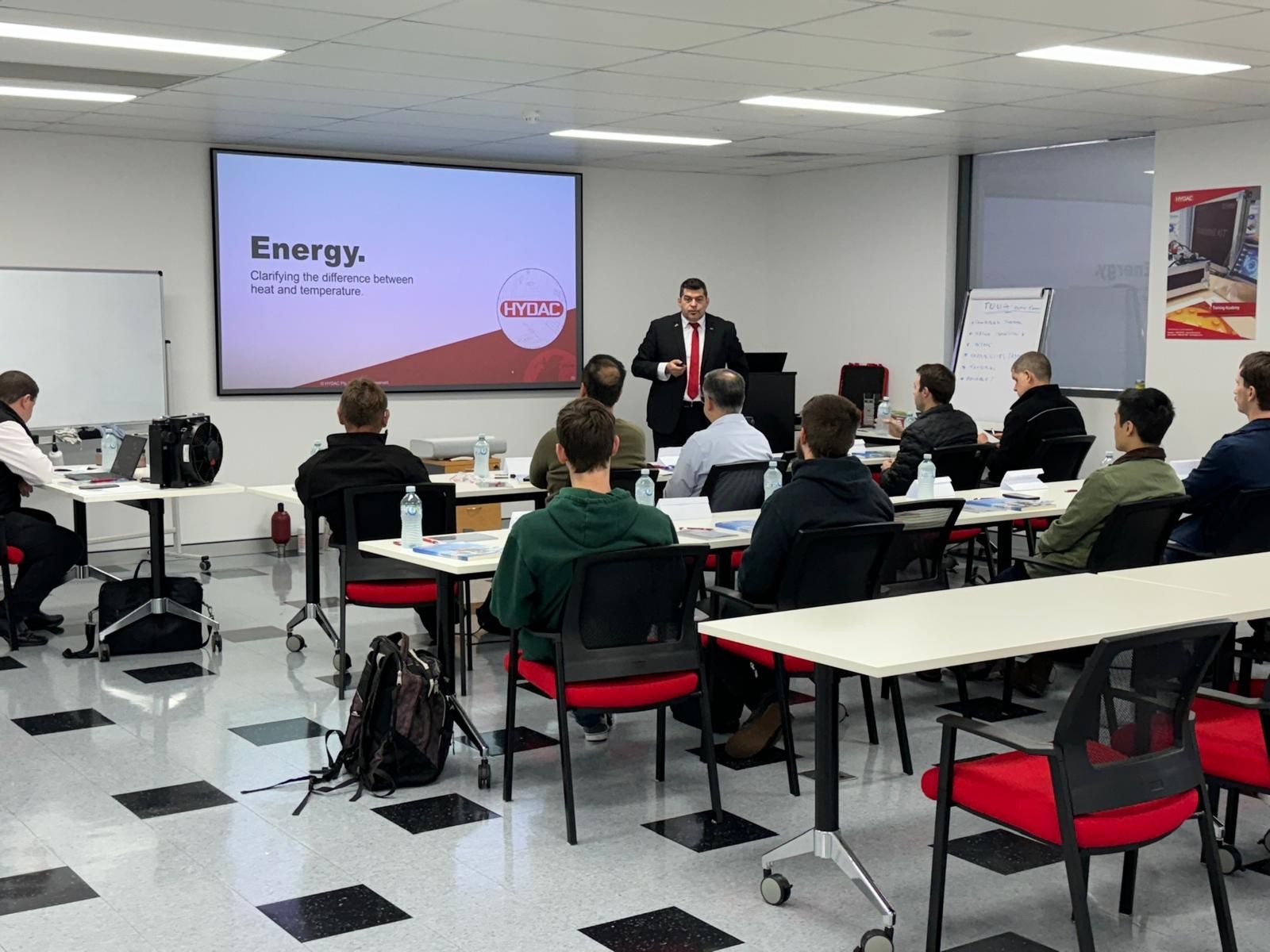
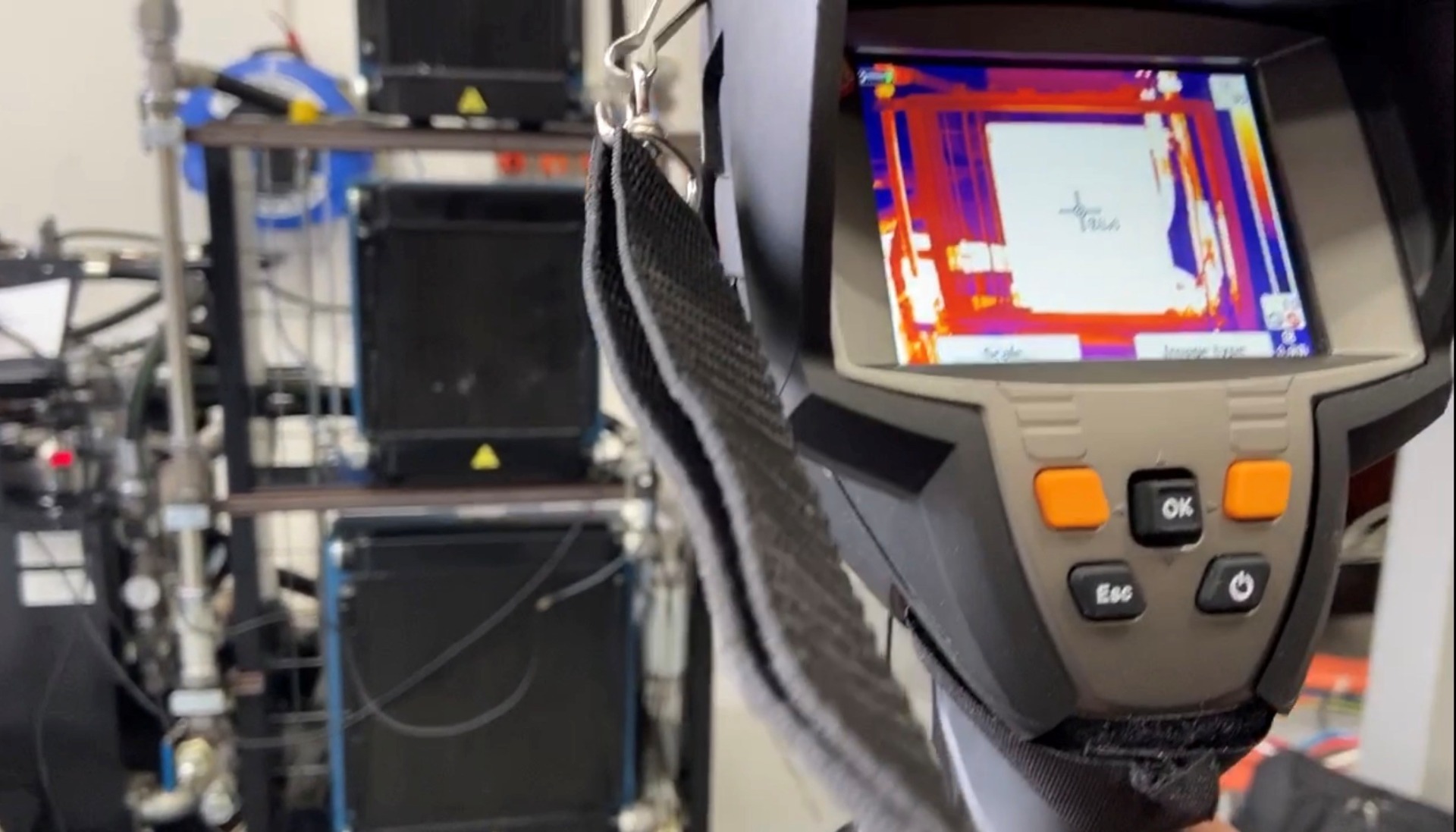
The training includes extensive time on the HYDAC TMS Training Rig, where you can work directly with air blast, brazed plate, chillers, cold plates, de-gassing filter as well as plate and bar construction, turbulators, IBP and IBT systems, and real-world issues like pressure spikes, surges, and design limitations.
By the end, participants walk away with a solid understanding of cooler selection, system behaviour, and practical techniques for improving thermal performance.
The 2026 course will run once at each HYDAC training centre:
• Melbourne 17–18 March
• Sydney 12–13 May
• Brisbane 14–15 July
• Perth 15–16 September
Seats are limited, contact us to register now.
FAQs
- What is the HYDAC Thermal Optimisation Training course?
The HYDAC Thermal Optimisation Training course is a specialised program designed to help engineers, technicians and industry professionals understand thermal management in fluid power systems. This course gives you a practical, hands-on look at cooling in fluid power systems and how to optimise thermal performance in real applications.
Who should attend the HYDAC Thermal Optimisation Training course?The HYDAC Thermal Optimisation Training course is suitable for engineers, hydraulic specialists, designers, maintenance professionals and technical teams involved in fluid power systems and thermal management. It is ideal for professionals who need to understand cooling requirements, improve system performance or make better decisions when selecting and applying cooling solutions in industrial and mobile equipment.
Why is thermal optimisation important in hydraulic systems?Thermal optimisation is important because excessive heat can negatively affect hydraulic system performance, component life and overall equipment reliability. Managing operating temperatures helps maintain fluid performance, reduce wear and improve efficiency. HYDAC’s Thermal Optimisation Training gives you a practical, hands-on look at cooling in fluid power systems and how to optimise thermal performance in real applications.
What causes hydraulic systems to overheat?Hydraulic systems can overheat due to factors such as excessive loads, inefficient cooling, incorrect component selection, poor heat dissipation or operating conditions that generate more heat than the system can remove. Understanding the causes of heat generation and heat transfer is essential for maintaining reliable hydraulic equipment. HYDAC’s Thermal Optimisation Training helps participants identify thermal challenges and understand practical methods for improving cooling performance.
What will I learn in the HYDAC Thermal Optimisation Training course?Participants will explore why cooling matters, how different cooler technologies work, and what separates a high-quality cooler from the rest. You will learn core concepts like manual sizing, fan theory, hybrid cooling strategies, and thermal simulation using Kuli. You’ll also get an introduction to BTMS and see how computational fluid dynamics supports modern cooler design.
How do cooling systems work?Cooling systems remove excess heat generated during equipment operation to maintain suitable operating temperatures. Coolers transfer heat away from hydraulic fluid using methods such as air cooling or other heat exchange technologies. The HYDAC Thermal Optimisation Training course explains cooling principles, cooler technologies and how different cooling strategies affect system performance.
Why is cooling important for hydraulic system performance?Effective cooling helps maintain hydraulic fluid quality, protect components and support consistent system performance. When temperatures become too high, hydraulic fluids can degrade faster and components may experience increased wear. Understanding thermal management allows engineers and technicians to select appropriate cooling solutions and improve the reliability of hydraulic equipment.
What types of cooling technologies are covered in Thermal Optimisation Training?The HYDAC Thermal Optimisation Training course includes extensive time on the HYDAC TMS Training Rig, where you can work directly with air blast, brazed plate, chillers, cold plates, de-gassing filter as well as plate and bar construction, turbulators, IBP and IBT systems, and real-world issues like pressure spikes, surges, and design limitations.
What is thermal management in fluid power systems?Thermal management in fluid power systems involves controlling heat generation, heat transfer and operating temperatures to maintain efficient system performance. It includes selecting suitable cooling methods, understanding thermal loads and ensuring equipment operates within recommended temperature ranges. HYDAC’s Thermal Optimisation Training provides practical knowledge to help professionals improve thermal performance in hydraulic applications.Can engineers benefit from Thermal Optimisation Training?Yes. Engineers can benefit from this training by developing a better understanding of thermal behaviour, cooling system design considerations and optimisation methods. The course helps engineers evaluate cooling requirements, improve system efficiency and make more informed decisions when designing or maintaining fluid power systems.
How can thermal optimisation improve equipment reliability?Thermal optimisation can improve equipment reliability by helping maintain stable operating temperatures and reducing the impact of excessive heat on hydraulic components. By understanding cooling requirements and system performance factors, professionals can implement better thermal management strategies that support longer component life, improved efficiency and reduced maintenance issues.
What industries use thermal management systems?Thermal management systems are used across industries where hydraulic and fluid power equipment operates under demanding conditions. These include mining, construction, manufacturing, mobile machinery, power generation and others. Professionals working with equipment that requires effective heat management can benefit from understanding thermal optimisation principles.
Does the HYDAC Thermal Optimisation Training include practical learning?Yes. The training includes extensive time on the HYDAC TMS Training Rig, where you can work directly with air blast, brazed plate, chillers, cold plates, de-gassing filter as well as plate and bar construction, turbulators, IBP and IBT systems, and real-world issues like pressure spikes, surges, and design limitations.
How long is the HYDAC Thermal Optimisation Training course?The HYDAC Thermal Optimisation Training course is delivered over two days and provides focused learning on thermal behaviour, cooling systems and optimisation methods. The training combines theoretical knowledge with practical application to help participants better understand thermal management challenges in real-world fluid power systems.
Why choose HYDAC for Thermal Optimisation Training?HYDAC provides specialised technical training based on extensive experience in hydraulic systems, cooling technology and fluid power applications. The Thermal Optimisation Training course helps professionals develop practical knowledge of thermal management and cooling strategies that can be applied to improve equipment performance and reliability.